Review: What Nora Knew

I had no intentions on reading and writing a review on a Chick Lit novel. This is not necessarily because I dislike the genre in particular, but because most of them tend to be too predictable, stereotypical, idealistic, unrealistically perfect etc so I tend to avoid them – yes, I’m one of those annoyingly fastidious people who demands that a film or novel be realistic to some degree (depending on the genre, of course).  What Nora Knew by Linda Yellin was an exception. I tend to skim over the blurb and take a quick peek at the first page or so of any novel in order to decide whether it’s worth continuing with, and on doing so for this novel, I was immediately and mercilessly hooked.
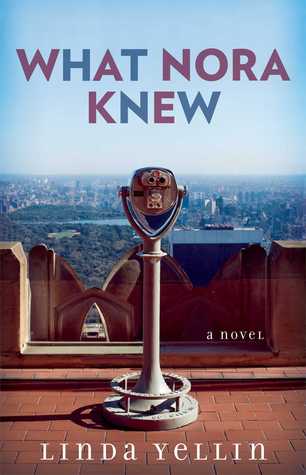
whatnoraknew

What Nora Knew is about Molly Hallberg (a writer for an online newsmagazine) who, having been through a (long) string of unsuccessful relationships – one marriage included – has a somewhat jaded view on love.  Although she is in a steady relationship with her current boyfriend, Russell Edley, she is not a believer in the sort of flowery love that is generally characterized by plenty of passion, elaborate and romantic gestures, and excitement etc – the sort of love that many of the characters in the novel coincidentally have. Instead, she settles for a “comfortable” relationship with him, mainly due to the limiting factor of her age (late thirties), or so she feels. Somewhere along the way, she meets a certain Cameron Duncan (a famous author) who she progressively, unwillingly and inevitably falls for. From this, I’m sure even those of you who are not familiar with/not fans of Chick Lit novels can guess the ending without too much difficulty.

Despite the stereotypical plot, I was quite fond of this novel. For, Yellin’s abilities as an author are more than admirable; the voice of Molly is so internal, witty, sarcastic, sharp, funny, entertaining and likeable. I was constantly chuckling and more than that, she seems very real – indeed it is like she is a real person talking to you instead of for you and that, to me, is one of the marks of a great author. However, that was the best part of this novel. The drama, events and dialogue – albeit quite entertaining in some parts – was mostly just a little bit above average.  At certain times, I actually got a little bored because there wasn’t anything particularly enthralling and some parts were not very believable. But, it was Molly’s amusing and engaging voice that kept me reading right to the end.

One other redeeming factor of the novel that I have to mention is that Yellin readily highlights the fact that most love stories in Chick Lit novels and Rom-Coms are stereotypical and/or predictable, but that people still want to read on or keep watching anyway because they are “mesmerized by the journey”. She does this through the guise of certain characters and with references to some Rom-Coms (the title itself is in reference to Nora Ephron who is most notable for certain films such as When Harry Met Sally and Sleepless in Seattle, for those of you who don’t know). It could just be me, but there is something rather comforting about the author acknowledging that what they’re writing about is stereotypical or clichéd and that they know that people still like to read it anyway to experience the “journey” – it makes them (or their writing, at least) seem more genuine.

Anyway, in short, this book was quite enjoyable but nothing to make you truly go WOW! The ending is very obvious (but then again, it was what Yellin intended), so I suppose some or most will do what she anticipates (as I did) – keep reading until the very end, not because they want to know who Molly ends up with etc, but because they want to experience the journey with her. This is most likely one of those books you might want to take along with you on a holiday (that is, if you like reading Chick Lit novels in the first place and/or if you like reading them when you’re away on  holiday). Even if there wasn’t anything especially riveting, the engaging and laughter-inducing voice of Molly herself would be enough to make most want to read this novel.

Solst-o-meter
Storyline: 6/10
Style of writing: 9/10
Overall: 7.5/10

– by Rosemary Nguyen

Review: American Hustle

With the hype surrounding the now not-so-new release of American Hustle and the consequent criticism it’s acquired (though to a much lesser extent), curiosity eventually got the better of me so I decided to go and see it for myself to consider whether both the positive and negative reactions surrounding it are justifiable.

Such an attractive cast...

Such an attractive cast…

*Warning: Some mild spoilers are included here.

American Hustle is a drama film based on a true story; it begins with some onscreen text stating, “some of this actually happened.” A little surprising that the usual “based on a true story” isn’t employed but heck, it still works. It follows on with quite a few flashback scenes with alternating voice-over narration from two of the main characters; Irving Rosenfeld (Christian Bale) and Sydney Prosser (Amy Adams). In fact, a little less than half of the film consists of some of their past moments and it gets a little tiresome at first – mainly because you just want to see what’s happening in the present, but it soon becomes clear that the flashbacks are crucial in understanding the present scenes. All in all, it starts off a little slow but soon smoothly eases into an intriguing ride.

From the flashbacks, we learn that Irving and his mistress and partner in crime, Sydney, are two con artists who cheat money out of their clients (or perhaps victims is a better word) through the ruse of a loan service business (of sorts). Having met a while back, they had decided to join as both lovers and business partners. On the sideline is Irving’s wife, Rosalyn Rosenfeld (Jennifer Lawrence) and their son (hers from a previous relationship whom Irving chose to adopt), although Irving does seem to be a doting father to the boy. To cut to the chase, one day their client/victim happens to be an FBI agent by the name of Richie DiMaso (Bradley Cooper). He eventually finds out about the illegitimacy of their “business”, and gives them the alternative of either facing an arrest or helping him arrest others (whom he suspects of obtaining illicit money). For fear of revealing too much about the film, I’ll stop there with the plot and storyline.

As it’s set in the 70’s (1978 to be exact), there’s a lot of typical fashion of the era – and very convincing it is too. There’s also plenty of glam attire and style – bar Irving’s comb over and Richie’s perm (although I will admit Bradley Cooper looks rather cute with those tight curls – don’t judge). Apart from the glam fashion, the film itself is rather glossy and suave – and I suppose this is where some of the criticism sprouts from. For, although it ticks just about every box for me – great acting from a great cast, absorbing plot, perfect filming in terms of pace and technique, and all the finer details such as accurate depiction of the surroundings etc – it feels as though there’s a little something missing. It could be that too much attention was paid towards creating a somewhat swanky feel to the film; at times it feels like it’s a little too polished or clean-cut, which doesn’t seem to suit the more serious tones that the plot would otherwise impart, or perhaps there isn’t as much depth and/or history behind some of the characters, leading to a slight lack of substance to the film as a whole. It could also be that there are a little too many injections of humour throughout (which again somewhat detracts from the more serious tones). Although I will say that some of the humorous dialogue included is pure gold in its simplest form, and provides a refreshing dose of comic relief (although again, I’m not sure if it’s needed). Or maybe I’m just being a little too nit-picky…

Nevertheless, this is still a must-see for those who love a good old drama movie; as aforementioned, the acting from the majority of the cast is top-notch (for those who have yet to see it, watch out for Jennifer Lawrence especially, who does an excellent job of portraying an emotional, stubborn, ignorant, slightly neurotic (and sexy) wife), the filming execution is great (one of the best I’ve seen in a while), and the plot – although a little seemingly dull and slow at the start – slides and then propels with a bang into an escapade that you just can’t stop watching until you’ve reached the end (where there’s a clever, spun out twist that’s either satisfactory or unsatisfactory – it’s a matter of opinion). Because of all this, it’s a true winner with some very minor faults in my opinion, and that’s why I give it a solid 8 out of 10.

– by Rosemary Nguyen

Sluts vs Players

So I was on the train the other day, casually minding my own business, when I heard a small group of girls a few rows down from where I was sitting (who looked to be in their late teens) talking about a “slut” they knew. Not bothering to keep their voices down – I’m assuming it was because there weren’t many people in the carriage – they gossiped with abandon about how this girl had supposedly been with many guys, and how people had found out and bullied/bad-mouthed her about it.

Now, I know what they were talking about is nothing out of the norm, but what was unsettling was that they seemed to relish the fact that she was being bullied. I won’t elaborate on how the girl was apparently bullied or to what extent, but the fact is that she was, and that these girls felt it was justifiable. At that moment, two things simultaneously popped up in my mind; I suddenly thought of pop artist Lily Allen’s latest single, Hard Out Here (where she sings about the inequality in treatment between promiscuous males and females), and mentally asked myself if these girls would relish or at least relish it as much if a promiscuous male was bullied, or bad-mouthed etc.

Lily Allen has a b***y p***y.

Lily Allen has a b***y p***y.

The answer in my mind was most likely not.

Because judging from other times that I’ve seen or heard people talking about similar matters, such males are only called reasonably offensive names and more often than not, they’re simply regarded as “players”. Whereas with females, the words “slut” and “whore” are often used with a heavy intent to denigrate them, and in some cases, almost make every word or action of hurt that comes their way seem justifiable.

So it’s obvious they earn heavier societal repercussions than their male counterparts do, and that is something I fail to understand. If, for example, both a male and female were to have the same (large) number of sexual partners and/or encounters – and the word “large” is very subjective here – it would most likely be the female who gets degraded and vilified more heavily. Lily Allen candidly sums this up with her lyrics, “If I told you ‘bout my sex life, you’d call me a slut…When boys be talking about their bitches, no one’s making a fuss…”

I know this topic/issue is nothing new, but having seen and heard people slut-shaming (as it is casually referred to) every so often, it’s irritating to see the discrepancy in treatment between both genders – especially when we’re supposed to be living in an era where males and females are equal, in a sense. I mean, I know it’s obvious that religion, culture, society/social norms and upbringing etc influences or helps to shape our views and opinions on these matters but to be honest, it’s simply unjust and demeaning to females, to say the least. Allowing males to do as they please in terms of sexual ventures and having any number of sexual partners without the harsh condemnation sets females back by far – in a way, it’s like restricting a right.

Don’t get me wrong, I’m far from being a misandrist, and I’m not going to inject my own views on promiscuity here either – as it is both unnecessary and irrelevant – nor am I aiming to sway other people’s views on it as it is a quite a complex and subjective matter – for example, people have different opinions on what it means to be promiscuous, or if it’s morally right or wrong etc. But what certainly needs to be pointed out is that in this day and age, females should have more rights than they have had previously, and having the right to be treated as equally as males in terms of sexual ventures and experiences is one of them.

– by Rosemary Nguyen