Cultural Code Switching, Explained By a Minority

A hard conversation? On Widow’s Lure? No way!

We all know that the only way to cure ignorance is education, and then it’s up to the person receiving it to decide whether they learn and grow from it, or choose to remain willfully ignorant.

However, I’ve always believed that the hardest conversations – the ones that make the air leave the room, and the ones that might make people even the slightest bit uncomfortable – are the conversations that really need to happen. Like, how would you understand why a certain word is considered a slur to a certain group of people if no one will plainly explain it to you?

For that reason alone, I don’t shy away from tough conversations. I may use humour to dilute the seriousness of these conversations from time to time, but if I can power through a hard conversation with the hopes that it helps or educates at least one person out there, then I feel like my job is done.

So with that long introduction out of the way, I wanted to touch on a fairly serious topic that some people might not even be aware of.

Code switching. Ever heard of the term?

At its core, code switching is when someone adjusts or changes the way they speak, act or behave depending on whom they’re around, the setting they’re in, and other external factors. In a very general and low-level sense, some examples of everyday code switching would be going from talking very casually to your friends (“Biiiiitch, guess who I walked past the other day?”) to then speaking more formally with zero profanity when in the office (“Can we set up a one-on-one to go over next week’s tasks?”) You might even behave or communicate differently depending on your friendship groups, like you might be a certain way around your friends from high school than you are around your friends from uni.

Those are very real and valid examples of code switching that everyone goes through in everyday life. But for many minorities, code switching is not just a social flexibility. It can be tied to safety, acceptance and a sense of belonging.

Enter: ethnic and racial code switching.

If you’re Polynesian, you’ll know what I’m talking about when I refer to the ‘Islander laugh’. And for those who haven’t been inducted into the Islander laugh, it’s a certain laugh that every Polynesian has where it’s loud, boisterous and has a supercharged energy or mana behind it. By all accounts, an Islander laugh is absolutely infectious and it’s when you know your Polynesian friend is comfortable around you.

I was talking to my dear friend and sister Eugenie (fellow Polynesian) about the Islander laugh, and I in all sincerity told her I didn’t think I had an Islander laugh, to which she replied that I absolutely do have one and she’s definitely heard it when it was just the two of us together. At first, I thought she was pulling my leg because I genuinely didn’t think I had it in me to produce an Islander laugh. (I was born and raised in country NSW predominantly around white Australians, then moved to Sydney where there was a Pacifika influence but I was still more around a western influence with friends of all cultures.) But as I stopped to think about it, a part of me realised that I did have an Islander laugh and maybe I had subconsciously only reserved it for other Polynesians because I code switched my laugh when around other ethnicities.

If that’s not a clear enough example of cultural code switching, let me quickly introduce you to the ‘pākehā voice’. For those playing at home, pākehā is the Māori word for a non-Māori and is more commonly used to describe white or predominantly white folks.

Now as a friendly reminder, I was born and raised in Australia and have never lived in Aotearoa or Samoa, or even Ireland for that matter. I proudly identify my nationality as Australian and I am very privileged to have grown up in a great country like Australia. So it should be fairly surprising to some that I even have a pākehā voice in general because theoretically that should be my default.

Pākehā voice is the voice and tone you reserve for when you need to communicate with people of other cultures (but mostly white folk) because you have an underlying or subconscious thought that they won’t take you seriously if you use your normal speaking voice. For example, when I am calling a business to make a first-touch enquiry or I’m calling to make an appointment at a clinic that I’ve never used before, my pākehā voice comes out to play because god forbid they take me seriously if I didn’t code switch my voice. When I take podcast interviews or other media talks for my wrestling career, my pākehā voice comes out, and I’ve even had my sister Toni tell me that she heard me using my pākehā voice outside my bedroom door and knew not to knock because the voice alone gave away that I was in an interview of some sort.

The idea that I have to adjust myself, even slightly, to accommodate people from other cultures is quietly laughable to me because I know that nothing about me needs to change and I know that I am very comfortable in who I am and I never shrink to fit in a room that doesn’t deserve me. But even with that knowledge, I still do it.

One thing that I’m big on is always pronouncing words like “Samoan” and “Māori” properly and not using the whitened pronunciations unless I absolutely have to because I don’t feel like I need to adjust my own culture to be more palatable or easier to understand to someone who might not be familiar with the natural pronunciation.

And if cultural and racial code switching wasn’t enough, welcome to queer or gender based code switching.

Some blatant examples of this include: keeping your partner’s gender purposely obscure because you’re unsure of the reaction you’ll receive when that information is divulged; deepening or heightening your voice to avoid possible discrimination; and toning down your wardrobe choices so not to offend others when it’s something you wouldn’t particularly want to wear.

While ethnic and racial code switching is more based in needing other people to understand and consume you, queer or gender based code switching is more based in protecting yourself and feeling safe in environments that you aren’t familiar with. And god forbid I have to go through both on a daily basis just to exist in Australian society.

I love that for the most part, Australia is generally safe for LGBTQIA+ folks and embraces multiculturalism that we are known for. But being a minority from both a racial and gender/sexual orientation standpoint, I find it interesting that my subconscious mind defaults to these kinds of redundant code switches even though I know I don’t need to. Especially as someone who does not shrink to fit into rooms and always embraces my truest self in social situations.

Perhaps underneath the boldness, the glamour and the confidence that I genuinely wield, is that little girl that needs to be understood and needs to feel safe, so these tiny code switches help to put her at ease. And if that’s what I need to do to nurture her, then so fucking be it.

And I’m not saying that in my pākehā voice.

– by The Black Widow
Six Facts About Pride Month

Wow, a listicle… and during Pride Month?!

(In fairness, I could be using that a lot more than I have been this June.)

Hello Widow’s Lureans! Wherever you are in the world, I hope you are all enjoying Pride Month, whether you are a part of the Alphabet Mafia, a proud ally, or just a quiet bystander.

It would be remiss of me not to touch on Pride Month as a proud B, Q and T of the LGBTQIA+. And instead of taking a fairly serious toned but still informative point of view like I did in 2024, I thought I’d take a more light-hearted but still checking your nonsense kind of tone in 2026.

So with that being said, here are six facts about Pride Month, compiled by yours truly.

1. Pride doesn’t exist to wipe out the cishets
This is the most tiring ‘argument’ I see whenever Pride Month rolls around. All of a sudden Larry the cishet white man – a subgenre of human that has been severely underrepresented in modern media, clearly – complains “What about Straight Pride? Where’s my Straight Pride parade? Should I be ashamed for being attracted to the opposite gender?” No you shouldn’t Larry. You should be ashamed for having a pea-sized brain, however. Pride exists because for decades, anyone outside of the cishet normality was shunned, crucified, persecuted and even jailed for simply existing as they are. The first brick was thrown at Stonewall because we were tired of living in the shadows and having to pretend to be someone we weren’t simply because of societal norms. Pride exists so that we can embrace who we are. Not everything revolves around you, Larry.

2. Men’s Mental Health Month can exist alongside Pride Month (shocker!)
Another tiring argument I see is “What about Men’s Mental Health Month?” Are you aware that two things can exist at the same time exclusive of each other? What a novel concept! If I can share the same birthday with my aunt, then Men’s Mental Health Month can share the same month as Pride Month. Although I think it’s super funny how these people harp on about men’s mental health yet when someone like Kane Evans shares his deeply moving and personal coming out story, all of a sudden their care for men’s mental health goes out the window and they start ridiculing him. Funny that.

3. Pride won’t turn your kids gay or trans
There goes a tale that should you look in the sun and see a rainbow, suddenly you will experience gender dysphoria and a sudden attraction to the same gender. Okay but seriously, if you believe in this and ‘the rainbow flag propaganda’, let me know what area you live in so I can point you towards the nearest library. Because that is NOT how LGBTQIA+ works. One phrase I see that I love, and bear with me while I paraphrase this, is “Pride doesn’t exist to turn your kids into gay kids. It exists so your kids don’t turn into dead kids.” LGBTQIA+ kids are four times more likely to attempt suicide than their cishet counterparts (source), which is a terrible fact. Pride exists so that these kids can love and embrace who they are so they can live longer and happier lives and not be forced into a closet or repression that could lead to them making some permanent choices. Again, not everything revolves around you, Larry.

4. Pride is for everyone*
This could be a potentially controversial opinion but I believe that pride and celebrating pride is for everyone – including the cishets. By that, I mean if Samantha the cishet ally wants to celebrate pride and embrace all of her LGBTQIA+ friends and family, then Pride is as much for Samantha as it is any member of the Rainbow Army. Don’t gatekeep pride for people who are genuine supporters of the community, especially at a time like this where our mere existence is being politically debated. So if you see Pride Month advertising and you as a cishet think “What can I do to celebrate Pride?” You can reach out to your queer friends and peers, check in on them, remind them that they are seen and loved and you have their backs. *Pride is not for the LGB without the T crowd. You shouldn’t be proud of who you are, because who you are is a horrible person who lacks critical thinking.

5. The B is still as valid as every other letter
If there’s one thing I hate nearly as much as I hate the “LGB without the T” crowd of half-wit morons, it’s those who try to shame or gatekeep Pride from bi, pan or queer folk in hetero presenting relationships. Delancey the bisexual woman married to her Golden Retriever husband deserves to be here as much as anyone else. The queerness in her doesn’t automatically disappear because she fell in love with and married someone of the opposite sex. Fuck outta here with your nonsense.

6. We just want to exist safely
If you think that Pride is just some leftist propaganda to turn everyone queer, then I’ll hold back my usual sassiness to hit you with this very important fact I touched on in number one – we just want to live our lives free of persecution, judgment or discrimination. That’s the main reason Pride exists. A same sex couple holding hands walking down the street is guaranteed to be met with a different and colder reception than a hetero couple; a trans woman simply existing in a dress is guaranteed to irk some small-minded folks; an ace-aro is guaranteed to heave a sigh as they have to explain to someone for the 1000th why they want to be alone. You don’t have to understand every letter and every aspect of LGBTQIA+, but what you can do is offer simple grace and compassion and realise that “Hey, I might not understand it all, but I acknowledge they’re human and they deserve the right to live the way they want”. That’s it.

I’m going to end this Pride themed piece with five very choice words that I want you to take away from this…

Fuck Riley Gaines, dumb bitch.

Happy Pride!

– by The Black Widow

What Pride Means To Me

It’s Pride season, bitches!

The month of June marks the start of a few things: it’s the start of a freezing cold Winter (in Australia, at least); and it also means that it’s officially Pride month!

The rainbow capitalism of it all would suggest that Pride month is just “gay month” where people wear ostentatious rainbow badges, socks, or outfits, and talk about how queer they are.

While I think both of those things are important to the representation of Pride month, that doesn’t even begin to cover what this month is really about.

Capture112

To me, Pride was born because of the many years that queer folk experienced where they were forced ‘into the closet’ because society dictated that they should not be proud of their queerness or who they are as people.

Pride exists, not only as a celebration of being queer which I think is a super important part of Pride month, but because the people under the LGBTQIA+ rainbow umbrella deserve the right to exist in this world without persecution.

Pride exists because if our generation can celebrate embracing our gender identity and sexual orientation, then the younger generations who may be questioning their identity will see that there’s nothing wrong with being attracted to the same gender, or realising that they’re not on the gender binary.

Pride exists to provide a safe space for those who may be ostracised from their family or friends, or for someone who’s deep in the closet but longs for a life where they can be with the person they love without fear of judgment or ridicule.

To me, Pride is obviously for the queer folk to celebrate who they are, but also exists as a reminder for everyone in general to embrace their true selves and love every aspect of themselves, whether it’s their gender identity, sexual orientation, or even other aspects of who they are like their race and cultural background, etc.

This Pride month, I want you to take some quiet time to yourself to sit back, think about all the wonderful aspects that make you truly you, and be proud of who you are and how far you’ve come in your life journey.

And if you are not ready to publicly embrace these parts of yourself, then that’s totally okay! When you’re ready, the Rainbow Army will be here to hold your hand, walk beside you, and guide you in your next step to living your true, authentic life.

Happy Pride month everyone! Love who you love, and most importantly, love who you are.

– by The Black Widow

You Don’t Need to Tell Me I’m Fabulous

At the risk of sounding overly offended/PC…

I have had an issue with people describing me with certain words for almost my entire life, and it wasn’t until recent that I understood why. And no, I’m not referring to people insulting me or calling me names because I tend to let that bounce off the thick skin I’ve built over the years as a queer POC.

If you don’t know me, then to summarise myself, I would say that I am an extrovert-introvert mix; when I am extroverted, I can be loud, brash, and the life of the party; when I am introverted, I keep to myself and like spending quality alone time. My introvert side is reserved for when I am at home or in a comfortable place, so when I am among friends and family, then my extrovert side comes out, and that is the side of me people tend to see.

I am carefree in that I wear whatever I want without fear of judgment or conforming to gender expectations. I like to put a lot of effort into my appearance – again without conforming to gender expectations – so as a cis male, I regularly get my eyelashes/nails/hair done, among other things. So one would look at me and make an easy assumption that I am very exuberant, bubbly, free-spirited, and outgoing. I fuck with these adjectives as they are, in a general sense on a surface level, very accurate.

Some of the adjectives that I have issue with (which is not an all-inclusive list), however, are fabulous and flamboyant. Let me tell you why.

25357104657_5a0f332bec_k

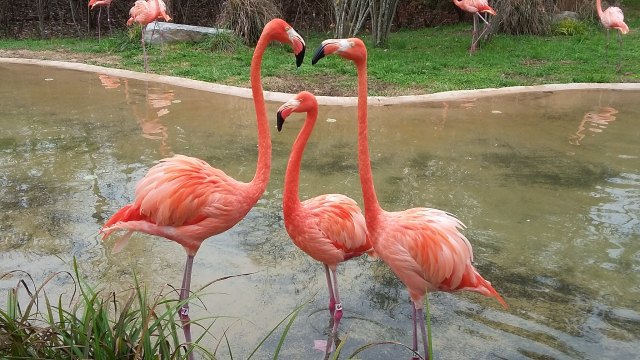
This is an actual flamboyance. SOURCE: Charity Davenport’s Flickr photostream

Dictionary.com defines fabulous as:
adjective
1) Informal. exceptionally good or unusual; wonderful; superb.

With that definition, the word fabulous can describe a lot of different things, and a lot of different people. A flashy Lambourghini could be described as fabulous. Chris Hemsworth could be described as fabulous; I mean look at the man.

However pop culture has determined that this word is reserved for two groups of people: large female personalities, and large queer male personalities, and thus lies the “issue” I have with being called fabulous.

To me, when someone calls me fabulous, it’s somewhat of a microaggression because really they’re just calling me “super stereotypically gay” and they don’t know how else to say it because society has conditioned them to believe that only people like me and Sharpay Evans can be fabulous. I could opt to wear a more conservative outfit like a pair of trackies and a t-shirt and sit quietly in the corner on my phone, but because I still retain my sexual orientation, I would still be described as “fabulous” even though there’s nothing exceptionally good or unusual about my presentation.

Furthermore, Dictionary.com defines flamboyant as
adjective
1) strikingly bold or brilliant; showy:
2) conspicuously dashing and colorful:
3) florid; ornate; elaborately styled.

Even though the dictionary definition of flamboyant could be used to describe a lot of things much like the word fabulous can, I can assure you that the first thing that popped in your head upon reading the word was a gay man wearing a bold pink outfit throwing feathers and glitter around because that’s society’s definition of flamboyant.

The word ‘flamboyant’ is a more blatant case or microaggression than the word ‘fabulous’ in that over-the-top women are barely ever described as flamboyant, if ever; this word is almost solely reserved for the “stereotypically gay males”.

One could make the argument that I have a very similar (extroverted) personality to Gizelle Bryant from Real Housewives of Potomac, but because she’s a cis female, she would never be described as flamboyant, whereas that adjective would be thrown at me like darts on a board.

I remember I was once in a class for uni and my lecturer at the time described a female student, who on the surface level had a very similar personality to me, as ‘bubbly and outgoing’, and then turned to me and said ‘flamboyant’.

I didn’t like it at the time, and I couldn’t put my finger on why I didn’t like it. It’s because it’s an adjective that society has reserved solely for gay/queer men, and like the term fabulous, it’s a microaggression that people use to describe someone when “over the top gay” isn’t appropriate or PC.

Don’t get me wrong: I’m not saying that it’s offensive to refer to someone as fabulous or flamboyant when really there is a compliment painted in that word. My main gripe with it as that when these words are used as a light-hearted way to just essentially call someone gay/queer, then you are pigeonholing that person into being just what their sexual orientation is.

We as members of the LGTBQI+ community have so much more to offer than just our sexual orientation. I have many friends within the community, and their sexual orientation or little microaggression terms like fabulous or flamboyant are not within the top 20 words I would use to describe them, and I would hope my friends think the same of me.

I am strong and resilient as I have bounced back from numerous hardships in my life.
I am fiercely loyal to my family and friends.
I am outgoing and love meeting new people.
I speak before I think, which can result in me either sounding really blunt, or really ditzy.

I am many several things before I am just pigeonholed into being queer.

– by The Black Widow