Body Dysmorphia as a Polynesian Pro-Wrestler

Deep breath. Here we go.

I’m a very confident person, and an outsider looking at me would think that I am totally confident and perhaps a little too confident? Either way, strangers, family and friends alike all have this perception of me that I love the way I am and the way I look. And it’s true, for the most part at least.

I have never had the healthiest relationship with my body, my weight, and the way I look in the mirror, and a portion of that was because of simple genetics. For those just tuning into Widow’s Lure, I’m biracial but predominantly Pacific Islander; I don’t have the exact ratios for you, but ethnicity-wise, I’m Māori, Samoan and Irish. And if you have never met a Polynesian person in your life, let me tell you from personal experience that because of how our genetics work, we are generally speaking a lot larger than other races, and we typically have the ability to grow muscle, put on weight and get bigger a lot easier than others.

Growing up in Australia and being exposed to western culture where all the advertisements showed conventionally attractive white folk who were either thin or ripped, at any stage of my life, I knew that my body did not look like that; dare I say I never had “the look”. I was always on the bigger side in both primary and high school, and even past my teenage years as I entered the workforce and studied at uni, I was still on the bigger side.
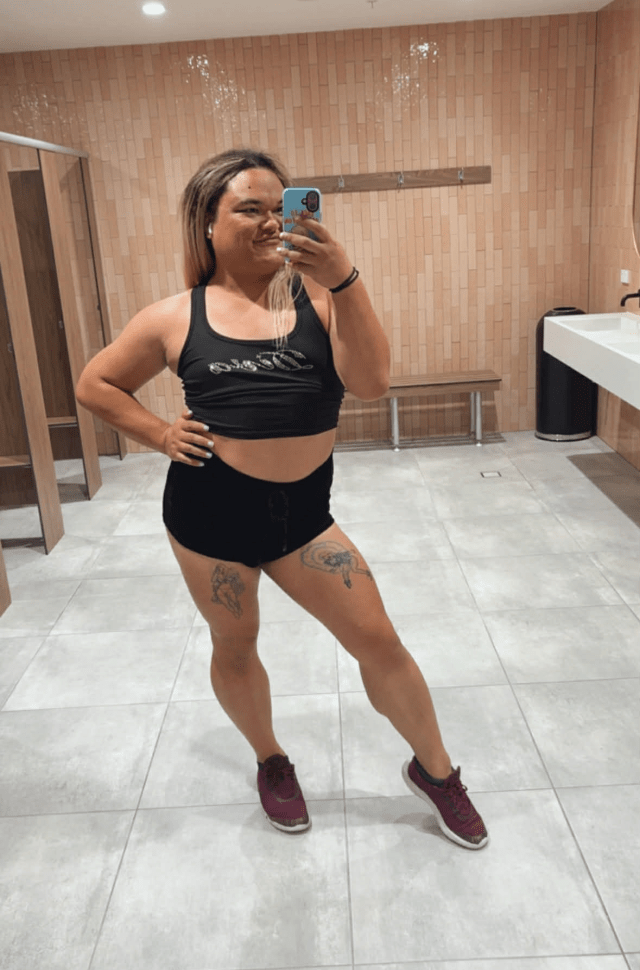
Learning to love the way my body looks has been a journey.

In 2017, when I first started wrestling training, I was still on the bigger side with not that much muscle mass. But then as I progressed with my training, I remember locking tf in and I ended up dropping over 15kgs, slimming and toning down, and being in really good shape. But because I was sitting at 90kgs, which is still considered quite heavy compared to other wrestlers in Australia, I still wasn’t happy with how I looked solely because of the number on the scales. Even though the mirror showed me a physically fit human and I could see the progress I was making through the gym and nutrition, I was still not happy with how I looked.

So I decided to bulk up and see if that would change how I looked at myself in the mirror. And because of bad habits, poor nutrition, and a general slothfulness, the bulk went the wrong way and I essentially put all the weight I had lost back on, and not in a good muscular way either. So I became even unhappier with the way I looked, especially considering the skimpy outfits I wore as Nikki Van Blair.

No matter how much I worked out and tried to eat better, my body still looked too big and not the right shape. But at the same time, I still had to convey the sexy, sassy and confident Nikki Van Blair that everyone had become accustomed to, so the skimpy outfits stayed but my perception of my body worsened. I point blank refused to weigh myself and steered away from scales, and was very selective of what kind of content I’d post on social media; content that suited the Nikki Van Blair brand but also hid parts of my body I was ashamed of through angles, clothing and poses.

At some point, I found myself annoyed at my genetics. I’d see wrestlers of other races either drop weight quickly or put on muscle quickly; even on top of that, just the wrestlers who were naturally smaller than me, I found myself envying them because why on earth could I not just effortlessly look like that.

Around 2022, I began to focus on what I was putting in my body and building muscle. I focused on my protein intake, followed a fairly solid gym workout routine and made sure I did some form of exercise (wrestling training included!) at least five days a week. I thought I was making solid progress because I could see my muscle development in the mirror… and then I weighed myself. I was officially the heaviest I’d ever been.

How on earth did I commit all this effort to bettering my health and my body and my scales are telling me that it was all in vain?

I know that muscle weighs more than fat – or to be more accurate, muscle is more dense than fat – and so a contributor to the numbers on the scales could be muscle gain, but to me, the numbers on the scale tell the full story. As a woman, especially a transwoman, being heavy is so humiliating and contributes to a dysphoria that didn’t need any further contribution to it. Like, how could a woman possibly weigh ___ kgs?

And as my fitness regime continued, and I followed a scheduled workout and included more daily steps and even reformer pilates into my routine, my weight would either stay stagnant or would go up even incrementally. I began enjoying for the most part of what I saw in the mirror, but the numbers on the scales destroyed my confidence.

And then I got a full body Evolt scan, and I finally had all of the numbers explained to me in a way that I understood. Turns out, I’m actually a lot healthier and fitter than I thought, and most importantly… my biological age is 27.
Understanding the actual science and numbers of my body helped my body dysmorphia a lot because now I recognise what’s happening inside my body and clock why the numbers are the way they are. Because of this, I have an appreciation for my Polynesian genetics and the relative ease I have to gain muscle. I might not be screaming my weight out loud because the numbers on the scale will always hold an unfortunate significance to me, but I am proud of the curvy muscular body I’ve worked hard to achieve. And now with the science behind me, I can look in the mirror and be happy with what I see. Now I just need to stay consistent and work hard to maintain this Jessica Rabbit figure of mine, especially since I’m 33-years-old.

Wait sorry. I’m 27.

– by The Black Widow
Three Things I Learned About Myself While Filming Heel Turn

And now for a self-indulgent post.

Hello Widow’s Lureans. I know I’m super inconsistent with posting on here, but it’s actually a goal on my vision board to write more and post more on here. So to quickly catch you up to speed on the past couple of years of my life:

– My parents have been living in Fiji for the past three years, which means I’ve been living in their house rent free so I could save more spend more money on clothes and beauty. Nikki maintenance is very expensive.
– Still at the same job which I enjoy most of the time.
– Still wrestling, still slaying in the ring and out. Still paired with my soulsister Frankie B, while also exploring solo opportunities as well.
– Had a crew film a documentary on me which premiered at the Mardi Gras Film Festival 2026 and was a hit with the people in attendance.

Just a casual documentary. You know, no biggie.

Talk about length. Talk about drama. Talk about stones. Talk about comfort.

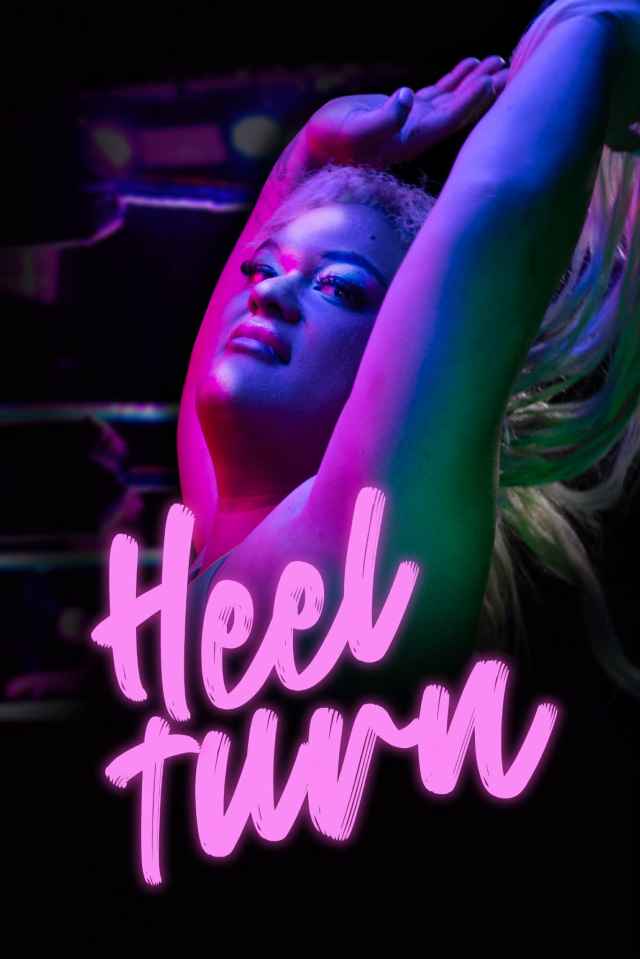
The aptly named Heel Turn focuses on myself and how I navigate the wrestling world as a queer transwoman of colour and how wrestling has helped and harmed me. But specifically, how I play a villainous character (heel) when society villainises parts of my identity that I can’t control anyway.

Over three separate days of filming (training at the PWA Academy, performing on a show in a match against Cosmo Cooper, and capturing some moments of me at my home), the wonderful crew worked with me to capture the real moments that show public Nikki and the vulnerable Nikki all wrapped up in an eight minute short film/documentary. Not only did I show them Nikki Van Blair, the ultra glamorous, confidently sexual and magnetically bitchy Queen Bee, but they also interviewed the somewhat serious, outspoken and unapologetic Nikki Hamilton, and in those moments, I found that I learned a few things about myself that I wasn’t consciously aware of before. I’m very intrigued by the psychology of humans and how everyone is fundamentally different from each other, and as someone who is as self-reflective as me – some would say I am too self-reflective –  I love discovering new things about myself, why I do things the way I do, and why I react to things the way I do.

So as an interesting thought piece, I wanted to share a few things with you that I learned about myself during or after the filming of Heel Turn with this fabulous crew.

1. I don’t have emotional walls built up; I have a door that I control.
We all know the saying that someone has walls built up to protect themselves from getting hurt. These walls can be beneficial, but in turn it stops people from getting to know the real you. I participated in a podcast interview for LGBT In the Ring with the director of the film Isabella, and she made a comment that I have a wall built up. I understand why she came to that conclusion because I know I do have a very noticeable public persona, but I respectfully disagree with her labelling. I don’t have a wall that people need to chip down or hurdle over; I have a door that I willfully control, and I can freely let people who deserve it into my inner thoughts and feelings and become vulnerable with them if and when I choose to. This documentary wouldn’t have worked if I refused to get raw and real with the team, and I found it easy to not only show them the Queen Bee, but also the woman who walks through life and navigates the wrestling world carrying an invisible burden through spaces that no one else has to think about. And that’s because I control that door, and I control that door handle.

2. I watch way too much Real Housewives
Now I’m very aware that I watch too much Real Housewives, but the actual point I want to make here is new to me. There is a point where the crew asked me how I felt after planning my match with Cooper, and by all means it was an easy and seamless experience as Cooper is great at what he does, he’s a professional, and I trust him not only as an opponent but as a friend as well. But because watching rich women scream at dinners has become second-nature to me, and knowing what they have to do as part of their job to create drama and entertainment, I brought up a small point of contention to the cameras between Cooper and I during the planning conversation. This was not fake or ‘produced’ in any way as it was something that I had genuinely felt in the moment. However, it was such a small thing to note that not mentioning it would’ve honestly sufficed, but because I’m a Bravo-holic, I brought it up. Because I know what makes good TV. Thank you Tamra Judge.

3. My story in wrestling is a lot more interesting than I originally thought, and is one that needs to be told
I feel like everyone can relate to this. Because I am living my own life in real time and experience everything I experience, none of it seems overly fascinating or interesting to me since it’s all real to me. But talking to the crew about everything in my life, personally and professionally in wrestling, and them being so fascinated with the everyday workings of my life, actually made me realise that my story is interesting. Not only that, but verbally coming to the realisation with the crew that I’ve knocked down a lot of doors for future queer folk in Aus wrestling, helped me realise that my story is a story that needs to be told. Because who doesn’t like a real story of someone who has to fight through discrimination, invisible walls, and moving through spaces with an extra weight on their shoulders, and creating a legacy for others to catapult off, because in reality that’s what I’m doing, and it’s incredibly humbling to realise.

I know that I take a lot of time to look within myself and self reflect, again some might say that I do that too much, but making these realisations about myself during or after the filming of the documentary have helped me to understand myself more and acknowledge that my journey in Australian professional wrestling is full of unchartered waters and untrodden path that will helpfully make it easier for future wrestlers of all the tribes that I proudly represent – Pacific Islanders, LGBTQIA+, women.

While the Mardi Gras Film Festival – and its on demand service – has ended, Heel Turn might be popping up in new online places, so keep your eyes and ears out because this short film will make you laugh, make you reflect, and might even make you cry. If I dare say so myself.

And you might even learn a new thing or two about me after watching it.

– by The Black Widow

Three Things They Don’t Tell You About Becoming a Wrestler

A wrestling article? No way!

I want to preface this by saying this won’t be a ‘peeling back the curtain’ type of article on the art of professional wrestling. I’m sure that’s been done to death, and I’m also sure that all wrestling fans are aware of what happens or can potentially happen behind the scenes.

This will be more of a look at things I wasn’t aware was going to happen prior to becoming a professional wrestler; things you don’t think about until it’s happened or happening to you, and you’re like “Wow”.

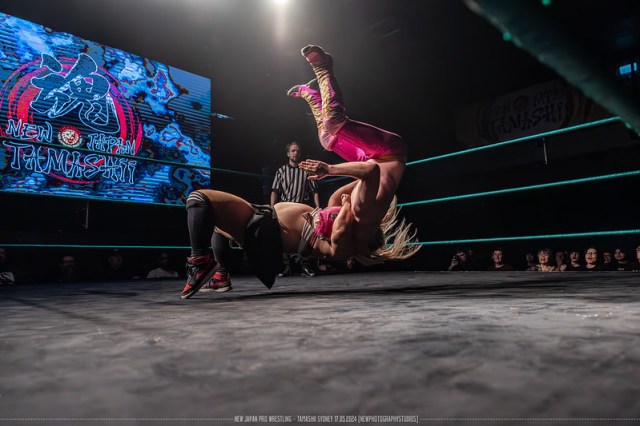
Before you do a suplex as pretty as mine, there are some things you should know. (CREDIT: New Photography Studios)

Before I begin listing these things, I would just like to add a disclaimer that this is based on my personal experience as a pro wrestler in Australia whose career spans across seven years. I’m sure others experiences would be vastly different to mine given outside influences, such as where they live, their access to training and shows, gender identity, race, etc. so by no means does this cover every single wrestler in the world.

 1. Wrestling will take up a lot of your time
This is applicable to any wrestler regardless of their end goal: whether you want to get signed and make this your full-time career, or if this is more of a weekend hobby for you. Be prepared to give a lot of your time to wrestling. On paper, training once or twice a week doesn’t sound like too much, but then consider the weekends where you’ll have a show on, or going into your wrestling school/set location to film a promo that can potentially take up to a whole day. Doing other forms of physical training like working out at the gym, yoga and pilates, etc. also counts towards the betterment of yourself as a wrestler.

Show day will require almost your entire day to be blocked out, because you need to pack down the ring, load it onto a truck, then you need to unload the truck at the venue, set the ring up, and if you’re performing on the show, then you need to start working out your match. And don’t think you’re going home when the show ends, because now it’s time to repeat that cycle: pack the ring down, load it onto the truck, unload it at the wrestling school, set the ring back up there.

And in between training, shows and filming promos, you’re also going to be brainstorming things about your wrestling persona: your character/gimmick, wrestling gear, merch ideas, etc. This alone will take up a lot more time than you could possibly imagine. So if you’re serious about becoming a wrestler, then be prepared to miss personal events for wrestling, and to feel satisfied but exhausted, sore but content.

2. This crazy bunch of people will become your family
Outside of my family and work colleagues, the people I spend the most time with are my fellow wrestlers/trainees, and I’m sure this will be applicable to you as well if you’re considering stepping inside the squared circle.

I’m guaranteed to see these people at least once a week at training, and then we’ll spend all day together at a show. Because I spend so much time with these people, I was bound to form a strong relationship with most if not all of the people I wrestle with. And because I’ve built such strong relationships with my co-workers in the ring, we often go out socially without the pressures of training or show day where we can let loose and have fun. 

Trust me when I say the friends you have from school, uni, or other avenues in your life will not get the same amount of time that your wrestling family will. And like any other family, there may be times where you argue or squabble, but you should be able to come back together eventually if you have that healthy respect and love for them; it’s normal. This has happened to me on multiple occasions. It’ll be fine. You’ll be fine.

3. Be prepared for wrestling to take a stronger toll on you mentally than it does physically
It’s a given that wrestling is a bit rough to your body; you’re learning how to throw yourself into the mat for sobbing out loud. But something that is rarely discussed is the mental toll it takes on you.

I don’t want this to scare anyone off chasing their dream of becoming a wrestler, so let me explain why. If you are willing to commit the time, effort and money to wrestling, then it’s safe to say that you care about wrestling. And when you care about something, if it doesn’t completely go according to your plan, then you may feel anxious, disturbed, dismayed or disappointed with the results. I have two examples of this happening to me:

1) I suffered a dislocated tailbone in a wrestling match. The physical pain of it hurt, obviously, and I couldn’t sit down for long periods of time. But what hurt me the most about this injury was that I had to sit on the sidelines for over a year, and the mental toll it took on me. When will I finally wrestle again? Will I ever wrestle again? Why is this taking so long? Will people forget about me? I can honestly say that the recovery of this injury was a lot harder on me mentally than it was physically.
2) I was written into a storyline which was then swiftly dropped seemingly out of nowhere for me, leaving me in limbo with ‘nothing going on’. To the outsider, this is such a small thing to happen that a wrestler should be able to bounce back from; to me, this was confirmation that I sucked, that I wasn’t a good wrestler, and that my time in wrestling was coming to a close.

Just like I say when someone is behind the curtain, nervous for their upcoming match: “You’re nervous because you care, which is a good thing”. If you make it into wrestling, sure there will be some times when you’re in your own head, feeling super anxious or even depressed about something wrestling related, but it’s important to keep in mind that you wouldn’t feel this strongly if you didn’t care about wrestling. But on the flipside, wrestling will always be there, so if you need time away from wrestling to get your head right so you can return at 200%, then I would strongly encourage you to do so.

Wrestling has truly been one of the biggest blessings of my life. I’ve created moments in my career that have resonated with and inspired fans across the globe; I’ve met some of the greatest people I will ever meet, including one of my best friends in Frankie B; and I can proudly say that I accomplished a dream that seven-year-old Nikki had way back when.

This too can be the case for you if you stick it out, because trust me when I say that the reward at the end of the tunnel is worth the long hours of keeping your head down and working hard.

– by The Black Widow 

The Beautiful People: George “Ferocious” Kambosos Jr

Cocky, brash and arrogant are just a few words that could describe young George “Ferocious” Kambosos Jr.

“I want them to remember my name,” he says.

Fit, strong, and determined... and he's only 21. (SOURCE: George Kambosos Jr's Facebook page)

Fit, strong, and determined… and he’s only 21. (SOURCE: George “Ferocious” Kambosos Jr’s Facebook page)

Looking at the ripped young man from Cronulla covered in ink, you wouldn’t suspect that he was once bullied for being fat when he was younger.

The 21-year-old first got into boxing when he was 11 years old as a way to get into shape during the rugby league off season. While George insists that he was not “heavily bullied”, comments from his school peers like “you’re fat” may have ultimately led him to where he is today.

“My dad said ‘…let’s start getting you a little bit fitter in the off season. What do you want to do?’ So I took up boxing for a bit,” says Kambosos Jr.

“I went from running laps coming last to the next season coming first.”

This simple way to get fitter turned out to be a “life changing” thing for Kambosos Jr.

“I fell in love with it,” he says.

His upcoming fight with Robert “Gummy” Toomey (Friday August 29 at Club Punchbowl for the Australian Lightweight Title) has George’s full attention, where he is prepared to walk out to the meeting before the bout wielding a packet of gummy bears to taunt his opponent, a move that he says “no Australian boxer really does”.

“I like to always stick to a fight. August 29 is my main objective. If you look too far in the future, you end up falling too early,” says Kambosos Jr.

His cocky approach to his upcoming fight, along with his almost arrogant attitude, stem from a pure love of the sport that he fell into as a child.

“It’s a sport. As much as it kill or be killed, it’s a sport,” says Kambosos Jr.

“Without boxing, I don’t know where I’d be.”

He sums up his love for boxing by saying, “This is my livelihood. I don’t know anything else. This is what I do.”

The sport of boxing can prove to be difficult to ascend up the ladder especially in Australia. Kambosos Jr was well aware of this and took it upon himself to get his name out there by combining his brash confidence with the benefits of social media.

“It’s a very tough gig… trying to get that fame and get people behind you,” he says.

With Toomey targeted, Kambosos Jr used social media to get into his head and provoke a reaction to score a fight that is the biggest fight of his life.

“I called him [Toomey] out,” he says. “(I said) ‘Toomey, you’re the champ. Let’s get it on, it’s the fight Australia wants to see’.

“That went onto a big boxing site and exploded on comments.

“Two days later, I got a call from the promoter. Fight’s on.”

Underneath the hard exterior and confident swagger lies a lion whose hard work ethic and determination to be the best wiped out any desire to cut corners to come first when he was a kid. Literally.

“All the kids (would be) cutting the corners and I’d be running normal,” he recalls. “My dad was like ‘Why don’t you cut the corners? You might finish second last’.

“(I replied with) ‘I’m going to do it the right way. I don’t care if I come last, it’ll pay off eventually in the long run’,” says Kambosos Jr.

It would seem overcoming adversity runs in the Kambosos family. George Kambosos Sr – Jr’s paternal grandfather – originally came to Australia from Greece with nothing. He worked hard at two jobs to set up his family to make it what it is today.

“No one disagrees with my choice of boxing,” says Kambosos Jr. “My dad’s always there by my side. He looks after a lot of the behind-the-scenes stuff that I shouldn’t be worrying about. My mum’s there making sure I’m eating healthy.”

George’s father Jim Kambosos believes that while boxing isn’t something that every parent wants their child to do, he and his wife are more than happy to support George in his sporting career.

“He took a passion and love for it and he found exactly what he wanted to do because he had a talent for it. We supported him rather than kind of turning him away from it,” says Jim.

“We just said, ‘Look, if that’s what you want to do, we’ll support you in every way.’ We’ve always supported him and we always will.”

George’s love for his family extends to the skin of his body, most of which is covered by ink from his chest, arms and even to his ankles.

“That’s my hobby outside of boxing,” says George regarding his tattoos. “Everything means something to me.”

Branded across his chest in ink is a phrase that George calls one of his mottos: Dream without fear.

“That works with not just boxing but it works anything. Don’t let nothing (sic) stop you.”

– by The Black Widow